I have to say, I didn’t fully get it at first - but after reading Brian O'Kelley ’s first post about AI Agents on BOK on Ads I think I got some of it.
(PS: If you know what BOK on Ads is - then I also know we’re probably from the same generation!)
Long story short: a very interesting scope expansion (couldn’t resist!) into brand safety & optimization and overall a daring play across several dimensions both for Scope3 and the web at large.
Over the past year we’ve had a couple of announcements around GenAI implementations in adtech - the most notorious being Viant Technology but I also liked Taboola's Abby and the Vibe.co ones. All quite different, targeting also different customer groups. Though they all broadly focused on advertisers.
This announcement expands on the previous ones in the sense that it is engaging the other half of the industry - the content side: publishers & media owners. Chapeau! 🎩
Coming from the supply side of adtech I can be a tiny bit biased.
And with my product hat on I appreciate the thought process behind this launch even more:
Manual process for validation
Using Claude in manual tests for proving the hypothesis: are LLMs understanding content reasonably well?
Layering the Advertiser context on top (from the LLM “memory”; no tools)
Lastly, generating the Ad Copy examples based on those 2 datasets.
2. Clear ICP
Advertisers spending between $10mln and $1bln (I assume this will expand)
3. Clear Value Prop (efficiency gains - cost)
Estimated cost for running an LLM for each page on the internet is 270k$ on Deepseek, and around 100k in one year (and has been decreasing sharply)
At that scale only a few percentages improvement would make the business case green already!
4. Solution!
Media Agent (hybrid LLM + ML?)
Context Agent + Other agents (Audience, Optimization) - which seem to rely on traditional ML signals
Naturally I do have some comments here:
SOTA model cost (Claude) vs open source is quite a different story (even fine tuning those will not make it reasonable in terms of costs at this scale)
In terms of zero shot prompt - I think you can go very far with that (but currently costs would be an impediment)
The main reason for fine-tuning from my POV (for this specific usecase) relates to costs but I can imagine gaining few points in effectiveness. (note: you can fine-tune small models for specific tasks that will rival the SOTA at a fraction of the price)
The hybrid approach for LLM and traditional ML makes A LOT of sense for adtech and I belive this will raise the bar - can’t wait to see performance reports!
On top of that there are also some more strategic decisions that also became clear:
Leveraging existing infrastructure (connections into DSPs and SSPs, relationships with advertisers and publishers - built via the original business focused on auditing and decarbonizing the adtech supply chain)
Building where it makes sense (tech is now ready for this use case: agents)
Focusing on a large TAM (brand safety)
Now I think that’s all fine and good and overall a great move! A move that will position them for what is to come. But what is to come?
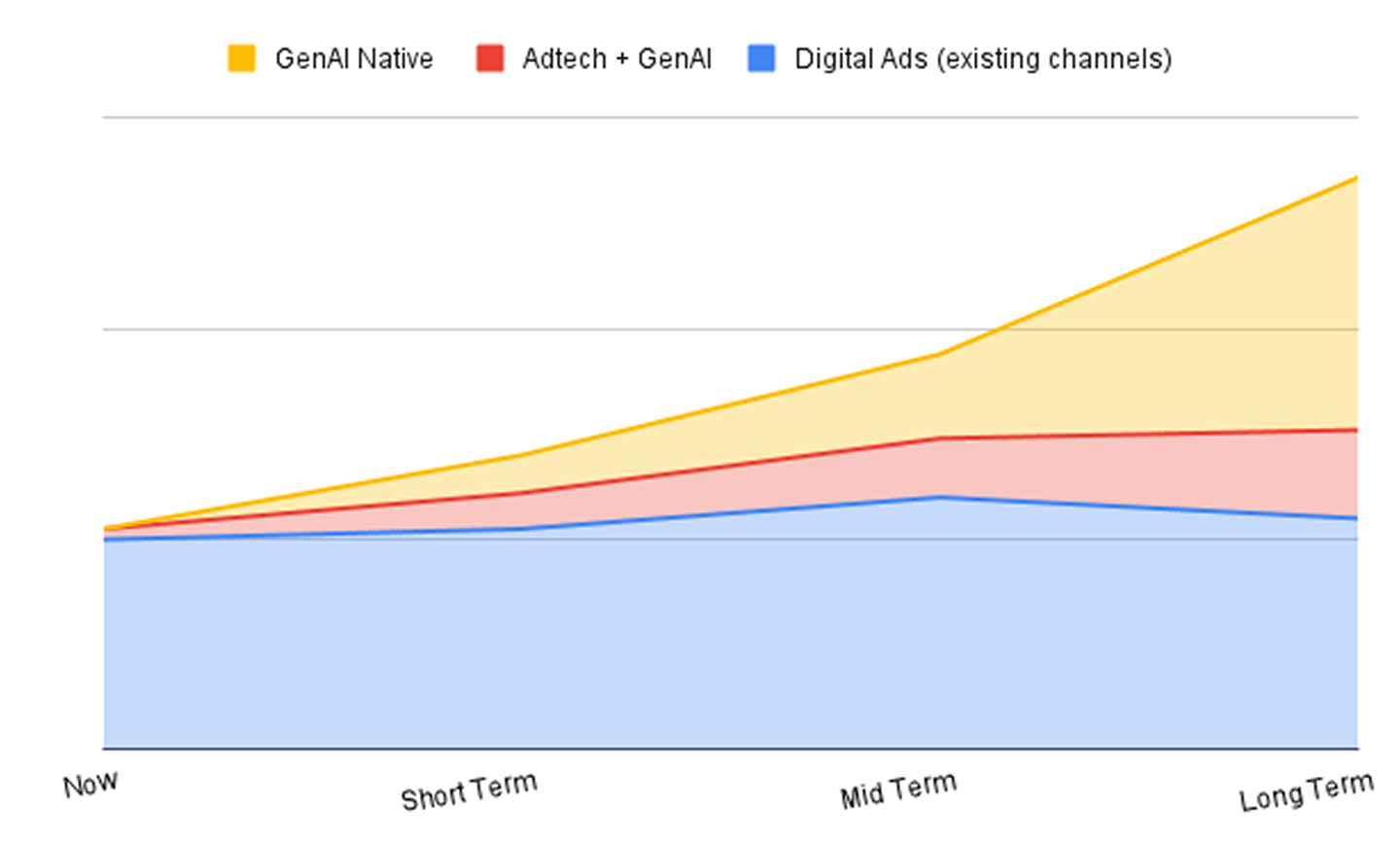
I see this evolution of (digital/programmatic) advertising as two stages:
Current industry adopting LLMs and GenAI 📍
Some use it for internal optimizations (incl. customer support, sales, etc.)
Others for expanding use cases (example -> Scope3, Viant, etc.)
2. Next wave - reimagining advertising
Not only on the “open web” but also in search (already happening) and social (soon to come).
Even the way we interact with devices is changing (especially newer generations) and that will be another tidal shift! 🌊
With that said (and promise I’ll end with this) I would love to see the IAB - specifically the IAB Tech Lab with Anthony Katsur take the ball from here and run with it. Specifically in terms of agents interoperability but also exposing web content to LLMs without the “noise”.
We already have LLM.txt and MCPs are starting to pop-up. Plus most of the adtech infrastructure has been based on open standards and open source tech (Prebid.org FTW!). We took some detours with mobile (apps) but it seems we’re getting back on track with GenAI and it’s time to build!





%201.png)